We Mean NGO

Blogs

Blogs

EmpowerHERment: Educational Framework and Gamification Strategy

We are proud to announce that EmpowerHERment (Equipping Migrant Women with Skills for Social Business, Leadership, and Sustainability) has completed its work on designing the Educational Framework and Gamification Strategy. The educational framework consists of two phases: Each phase and the modules included by them serve a distinct purpose to build core competences in professional and personal adaptation and social entrepreneurship. Moreover, the modules follow Problem-Based Learning (PBL), Experiential Learning, Gamification Strategy, and Flexible Delivery as key methodologies in teaching. Finally, to support educators and learners, the project provides three integrated tool packages: Curriculum Guide (Teacher’s Manual), Learner Workbook (Activity Book), Case Studies, Digital Resources & Practical Tools Pack. Want to learn more and check out what we have done so far? Take a look at the Educational Framework and Gamification Strategy yourself! Erasmus+ KA220-ADU | Cooperation Partnerships in Adult EducationProject Reference: KA220-ADU-DE07665BDuration: November 2025 – May 2028 (30 months) Co-funded by the European Union

Blogs

EYED Toolkit is here soon!

E-commerce is a growing field, and we are excited to be among the pioneers and set a path for young people and youth workers to participate in this growing sphere. EYED (Empowering Young Entrepreneurs in Digital Marketing and eCommerce) has started working on its toolkit. This open-access learning resource will equip young people and youth workers with practical AI/Generative AI, digital marketing and eCommerce skills. A case study for each respective module and a map including all available AI and eCommerce tools will be included in the final product. Research work is currently being conducted to ensure the final toolkit: If you, as an e-commerce specialist, want to contribute, feel free to contact us! For youth, something great is coming. Let’s stay in touch! -EYED (Empowering Young Entrepreneurs in Digital Marketing and eCommerce)

Blogs

Modern Steps for Modern Youth: The EYED Project Kicks Off in Riga!

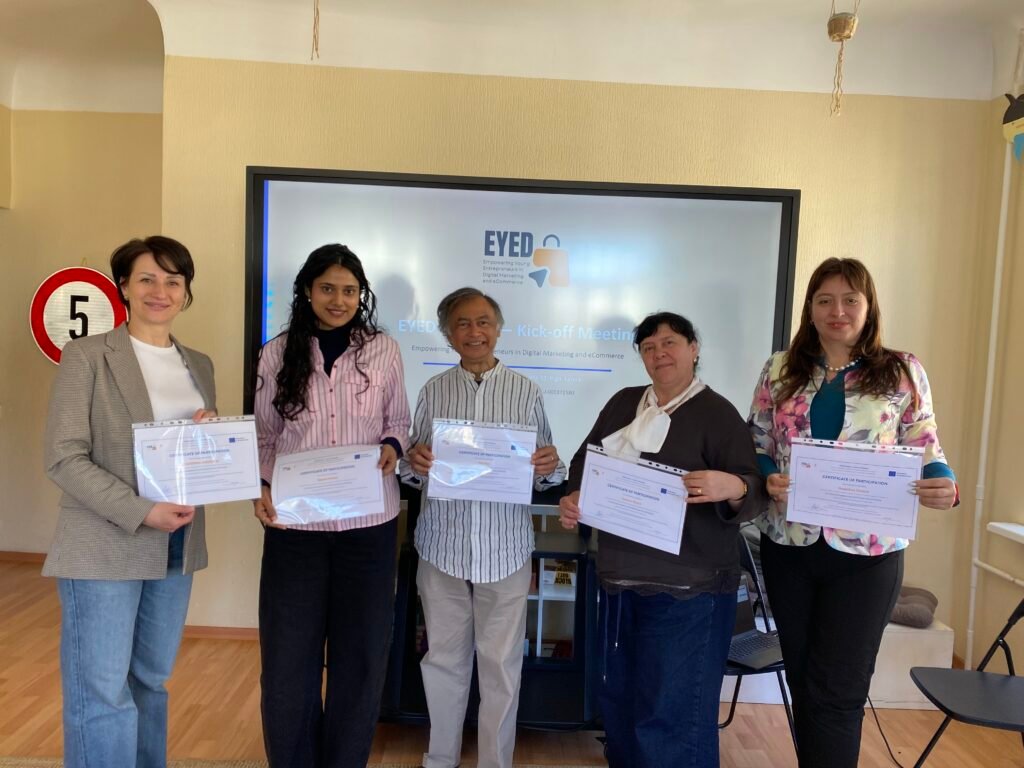
On May 8th, the very first partner meeting of the EYED (Empowering Young Entrepreneurs in Digital Marketing and eCommerce) project took place in the beautiful city of Riga. As the lead partner, we were absolutely thrilled to welcome our Estonian partners (PRINOVA OU) and Bulgarian partners (BASD) to Latvia. Our first kick-off meeting was a whirlwind of energy, brainstorming, and shared vision. We dove straight into planning how to best support rural youth and NEET (Not in Education, Employment, or Training) youth who have fewer opportunities. It is safe to say we are incredibly excited for what is coming next! What is the EYED Project All About? The core aim of the EYED project is to provide European youth with modern, cutting-edge skills in digital marketing and e-commerce. To make this a reality, our partnership is working to create a comprehensive, 5-module digital toolkit: This toolkit won’t just sit on a digital shelf. It will serve as the foundational training base for an upcoming exchange of youth workers and national training cycles across all participating countries. In the coming months, we will be launching focus groups and refining our modules to ensure they hit the mark for the young people who need them most. Stay tuned to our website and social channels for updates, sneak peeks at the toolkit, and opportunities to get involved in the national training cycles. The future of digital entrepreneurship is bright, and we are proud to be building it together! NGO We-Mean

Blogs

Fostering Inclusion: On the Finish Line of the “Drama Therapy for Children with Special Needs” Project!

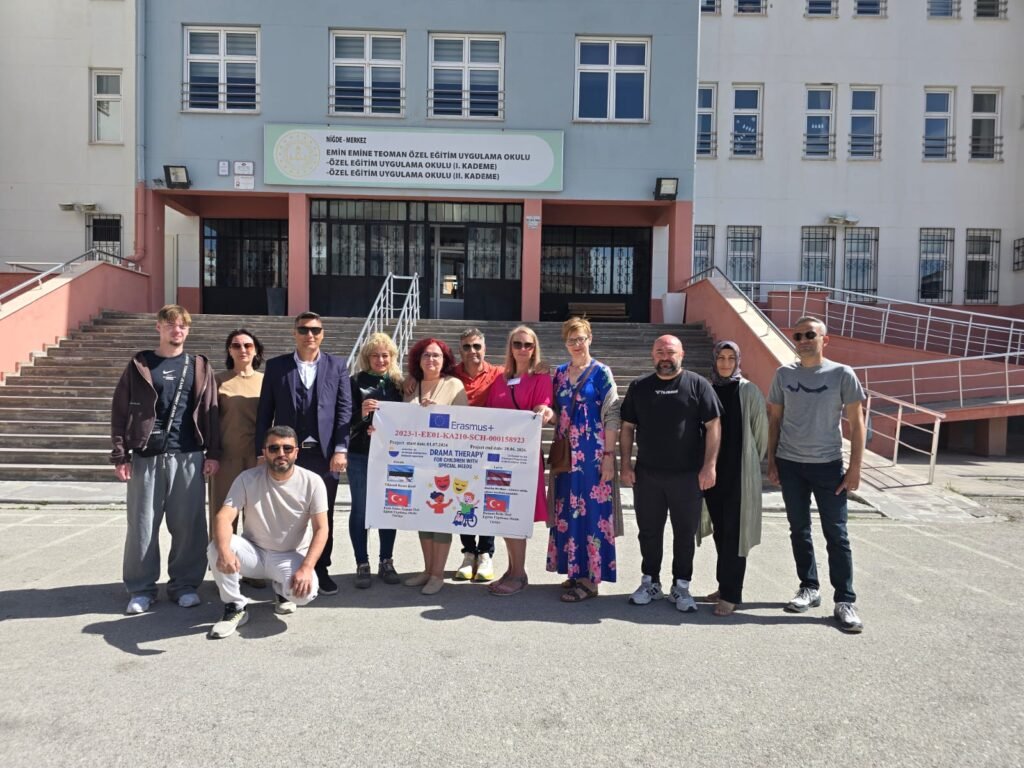
To create a brighter future for the younger generations, we must continually look for innovative ways to support every child’s unique journey. Recently, we wrapped up our participation in a deeply impactful Erasmus+ small-scale partnership: Drama Therapy for Children with Special Needs. As the Latvian partner in this initiative, working alongside our wonderful coordinating school from Estonia (Viljandi Kaare Kool) and our partners from Türkiye (Emin Emine Teoman Özel Eğitim Uygulama Okulu 2.Kademe and BELDE ÖZEL EĞİTİM UYGULAMA OKULU 2. KADEME), we set out to tackle a major challenge: helping children with special educational needs develop the vital social and emotional skills they need to thrive. The Covid-19 pandemic had previously isolated many of these students, increasing anxiety and communication difficulties. Through this project, we turned to the therapeutic power of drama, play, movement, and storytelling to provide a safe space for them to heal, express themselves, and build lasting confidence. This project wasn’t just about theory; it was about hands-on practice and international cooperation. Our team participated in four transformative training mobilities across Europe, each bringing back invaluable methodologies to our local community: Now that the project has concluded, we are incredibly proud of the lasting impact left at every level: Though this specific project cycle has come to an end, the methods we learned and the bonds we built with our Estonian and Turkish partners remain stronger than ever. We are excited to carry the magic of drama therapy forward into our upcoming youth initiatives. Thank you to everyone who made this journey possible: our passionate educators, our brave young participants, and the Erasmus+ program for supporting this vision! Keep an eye on our page for more updates as we continue building a better, more inclusive future. Kind Regards, NGO We-Mean

Blogs

Empowering Migrant Women: Updates on EmpowerHERment Project and Gap Analysis Results

Welcome to the latest update from Biedrība We-Mean! We are incredibly proud to serve as the Latvian partner for a transformative Erasmus+ initiative the EmpowerHERment KA220 project, officially titled as “EmpowerHERment – Equipping Migrant Women with Skills for Social Business, Leadership, and Sustainability, Empowered by Problem-Based Learning, Digital Innovation, and AI Tools“, this initiative is fundamentally reshaping how we approach social and professional integration for women immigrants.   Co-funded by the European Union, our overarching objective is to equip over 100 female migrants with vital entrepreneurial, digital, and employability skills. By leveraging an AI-enhanced online training platform and Problem-Based Learning, we are developing accessible, tailored education that directly aligns with Erasmus+ priorities.   Recently, our consortium conducted a comprehensive Gap Analysis to lay the factual groundwork for our upcoming curriculum for educators. The insights gathered represent a “triangulated truth” derived from 253 stakeholders across five partner nations, blending quantitative data from 181 surveys with qualitative insights from 52 focus group participants, 10 expert interviews, and institutional SELFIE assessments.   Our research confirmed a crucial strategic pivot: we must move away from the “Individual Deficit” model and address the “Institutional Failure” model. Integration is not a linear educational journey; it requires navigating structural friction points that currently sequester migrant women at the socio-economic margins. To create a genuinely effective intervention, our ecosystem targets three non-negotiable systemic gatekeepers: • Functional Language Erasure: Language is a structural barrier. Without the proficiency to navigate legal rights and institutional contracts, migrant women remain in a state of dependency and invisibility. • Legal and Administrative Precarity: Opaque residency processes and the non-recognition of foreign qualifications actively produce “de-skilling,” systematically pushing highly qualified women into the informal economy. • The Motherhood Penalty (Temporal Scarcity): Disproportionate care responsibilities act as rigid temporal barriers. This “care burden” depletes the cognitive bandwidth needed to engage with traditional, inflexible educational models. Furthermore, we identified a critical Digital Paradox. While there is immense interest in AI-enhanced learning, high data costs and reliance on smartphones create barriers. Consequently, we are ensuring our AI-Enhanced Online Training Platform and App are mobile-first and optimized for low-bandwidth, offline accessibility. Technology must facilitate inclusion, not serve as a secondary layer of exclusion.  We-Mean NGO Co-funded by European Union
Scroll to Top